Algeria Ranks Fourth Largest Arab Economy with $915.79 Billion GDP (PPP)
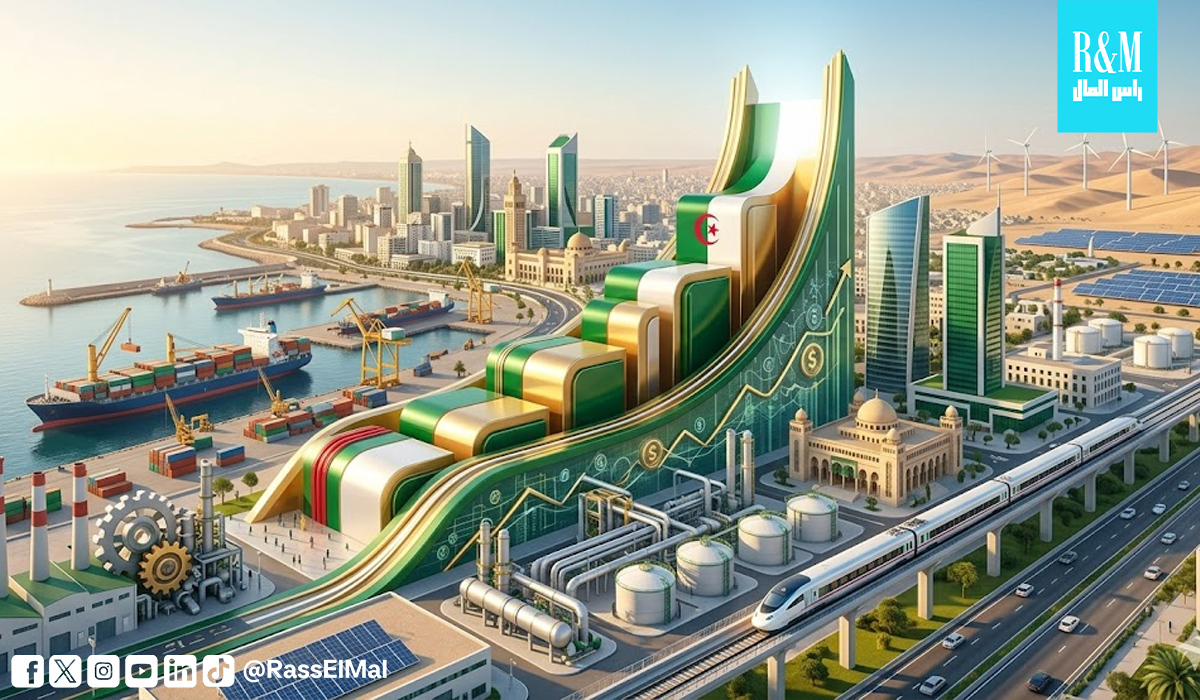
Image: Rass El Mal
Takeaway
Algeria's strong PPP ranking signals underlying economic strength beyond nominal exchange rates, making it attractive for long-term investments. Energy companies should monitor Algeria's diversification efforts and investments in mining and manufacturing, as these sectors present new partnership opportunities. Investors should also consider the impact of hydrocarbon revenue fluctuations on Algeria's fiscal policy and diversification strategies.
According to the International Monetary Fund (IMF), Algeria's economy ranks as the fourth-largest in the Arab world based on Purchasing Power Parity (PPP) for 2026. The IMF's data, derived from the October 2025 World Economic Outlook, estimates Algeria's GDP at approximately $915.79 billion. This places Algeria behind Saudi Arabia ($2.85 trillion), Egypt ($2.53 trillion), and the United Arab Emirates ($999.95 billion).
This ranking reflects Algeria's real economic capacity, accounting for domestic price levels and providing a more accurate comparison of economic output. The IMF's methodology offers a clearer view of domestic production and consumption capacity, especially for emerging economies where exchange rate volatility can distort nominal GDP figures. In 2025, Algeria's nominal GDP was approximately $288.01 billion. The IMF projects Algeria's economy to expand by 2.9% in 2026.
Algeria's PPP-based GDP also positions it among the top four economies in Africa, alongside Nigeria, Egypt, and South Africa. Globally, Algeria ranks 39th in GDP (PPP) terms for 2026, surpassing economies like Switzerland, which is estimated at around $909.09 billion. The IMF anticipates Algeria's PPP GDP to reach $956 billion in 2027, $998 billion in 2028, and $1.041 trillion in 2029.
Hydrocarbon revenues, particularly from natural gas exports, remain a key driver of Algeria's economic performance, supported by strong foreign exchange reserves. Public investment in mining and industrial projects, along with efforts to diversify the economy, has also contributed to broader economic activity. The government has strategically channeled financial surpluses from hydrocarbon exports into diversifying the productive base, including investments in new gas fields and the development of industrial value chains.
Looking ahead, Algeria's economic position will depend on its ability to maintain energy revenues while accelerating diversification into non-hydrocarbon sectors. The IMF forecasts Algeria's economic growth at 2.9% in 2026, reflecting stable macroeconomic conditions. Continued state-led investment is expected to remain central to sustaining this trajectory.