Algeria, Switzerland Discuss Enhanced Judicial and Police Cooperation
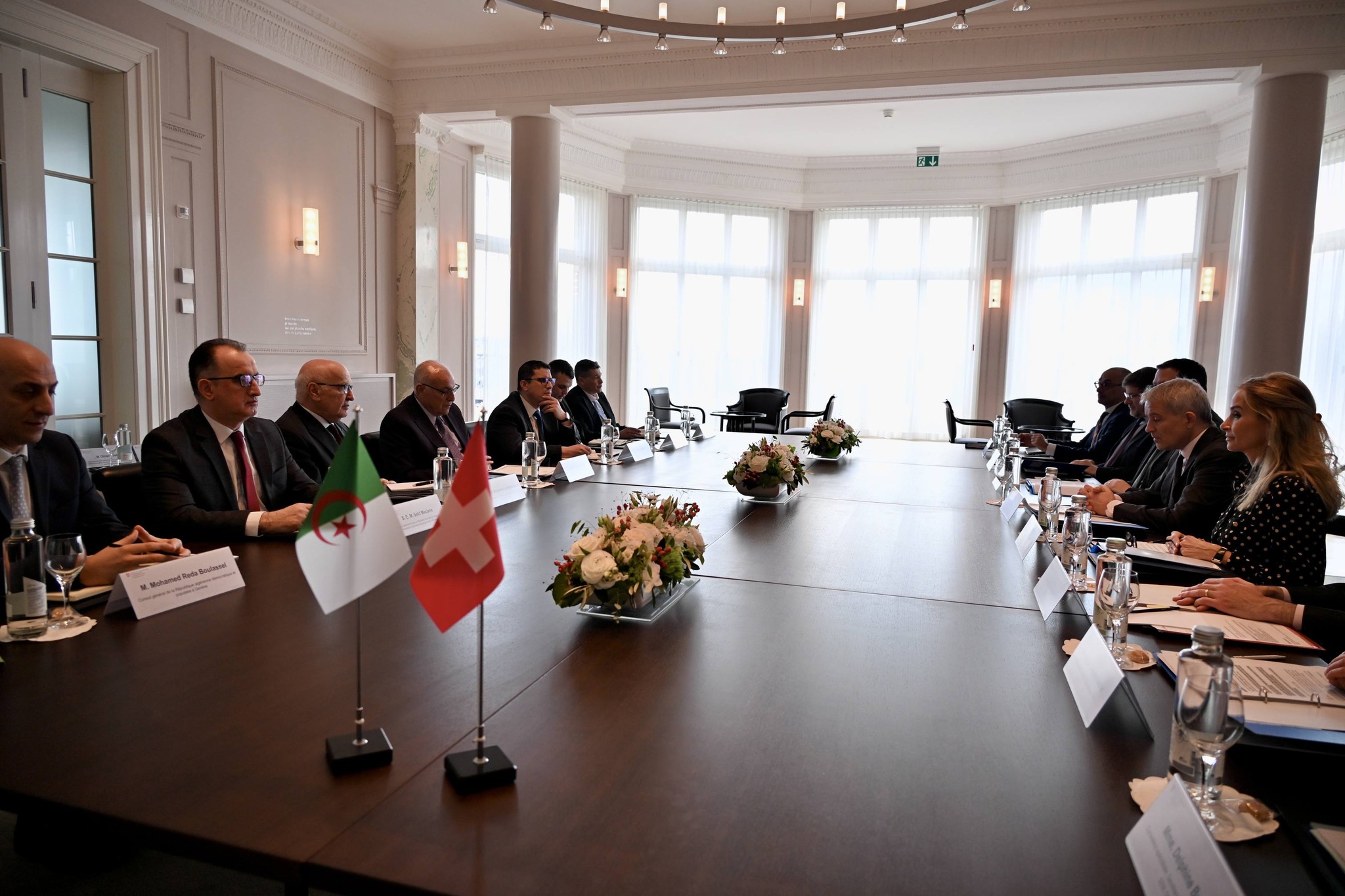
Image: Echorouk
Takeaway
Increased scrutiny of financial transactions and greater enforcement of anti-corruption laws could impact companies operating in both Algeria and Switzerland. Investors should closely monitor legal and regulatory developments related to cross-border financial flows and ensure compliance with international anti-money laundering standards. Enhanced cooperation may also lead to greater transparency and accountability in business dealings, potentially leveling the playing field for ethical companies.
Algeria's Minister of Foreign Affairs, Ahmed Attaf, concluded his official visit to Switzerland on Thursday by holding discussions with Beat Jans, the Head of the Federal Department of Justice and Police. The meeting in Bern focused on the status of judicial and police cooperation between Algeria and Switzerland, exploring avenues to enhance its effectiveness and efficiency. Both parties aimed to ensure optimal handling of security and legal concerns for both nations. Earlier in the day, Attaf was received by Pierre-André Page, the President of the Swiss National Council.
Algeria and Switzerland have maintained friendly and cooperative relations across various sectors. Strengthening judicial and police cooperation aligns with Algeria's broader efforts to enhance its security apparatus and combat transnational crime. In recent years, Algeria has been actively working to modernize its legal framework and improve its law enforcement capabilities. This collaboration with Switzerland could provide access to advanced expertise and technologies in areas such as cybercrime, counter-terrorism, and financial crime investigations.
Specific details of the judicial and police cooperation were not disclosed, but such collaborations often involve information sharing, extradition treaties, and mutual legal assistance in criminal matters. Switzerland's expertise in financial regulation and asset recovery could be particularly valuable to Algeria in its efforts to combat corruption and illicit financial flows. Similar international collaborations often involve joint training programs for law enforcement personnel and the exchange of best practices in crime prevention and investigation.
Enhanced cooperation between Algeria and Switzerland in judicial and police matters could benefit both countries by improving their ability to combat transnational crime and ensure security. Algerian law enforcement agencies could gain access to Swiss expertise and technology, while Switzerland could benefit from Algeria's experience in dealing with regional security threats. This collaboration could also have implications for companies operating in both countries, as it could lead to increased scrutiny of financial transactions and greater enforcement of anti-corruption laws.
Looking ahead, it will be important to monitor the specific initiatives and agreements that emerge from this enhanced cooperation. Key indicators to watch include the number of joint investigations launched, the volume of information exchanged, and the success rate of extradition requests. Any significant developments in these areas could signal a deepening of ties between the two countries and a greater impact on the security and legal landscape in both Algeria and Switzerland.