Algeria Eyes Global Green Hydrogen Leadership, Leveraging Solar and Wind Resources
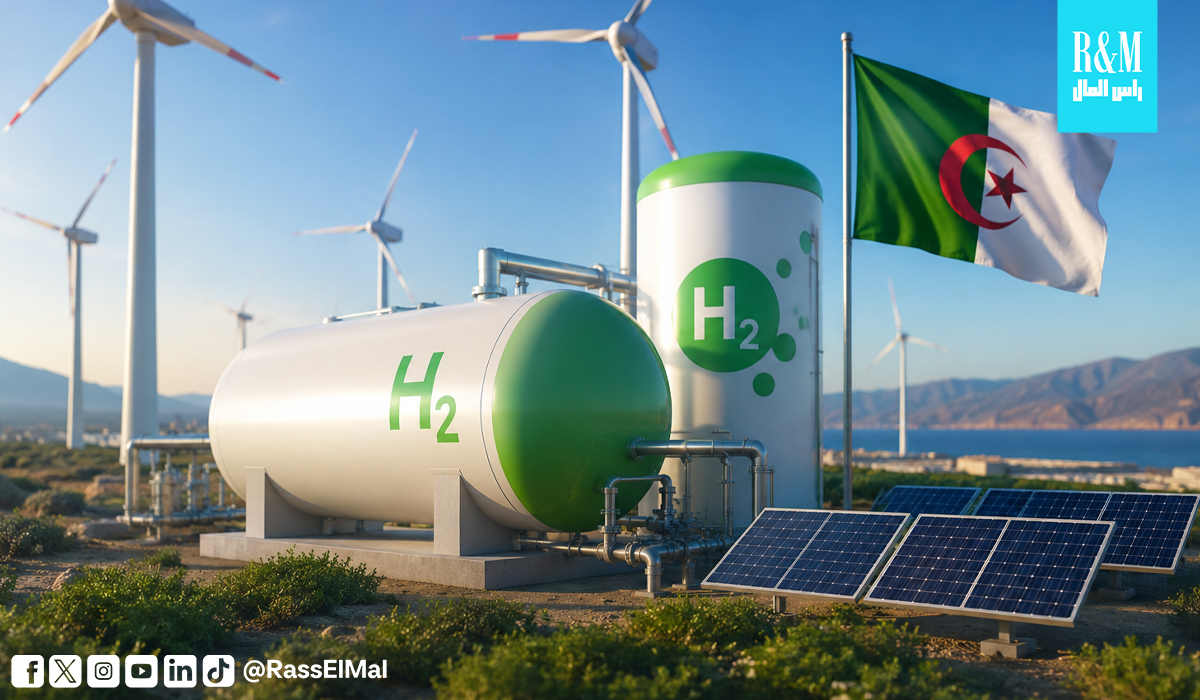
Image: Rass El Mal
Takeaway
Algeria's focus on green hydrogen presents a significant opportunity for international investors, particularly those in the renewable energy and infrastructure sectors. Companies specializing in solar PV, electrolysis technology, and pipeline construction should closely monitor Algeria's policy developments and investment tenders. The potential for Algeria to become a key supplier of green hydrogen to Europe could reshape the energy landscape in the Mediterranean, impacting LNG demand and creating new opportunities for hydrogen-related infrastructure projects.
Algeria is positioning itself to become a major player in the global green hydrogen market, capitalizing on its abundant solar and wind resources. Joe Williams, CEO of the Green Hydrogen Organisation (GH2), emphasized Algeria's potential to produce green hydrogen at a competitive cost, giving it a strategic advantage in the future global energy market. GH2 is a non-profit foundation under Swiss law that aims to accelerate the production and utilization of green hydrogen across various sectors. The organization has offices in Geneva, London, Perth, Sydney, and other locations.
Algeria introduced its National Hydrogen Strategy in March 2023, with the goal of becoming a major player in the global green hydrogen market by 2040. The strategy involves a phased approach to building a hydrogen economy, leveraging Algeria's renewable energy resources and strategic location. By 2040, Algeria aims to produce and export 30 to 40 terawatt-hours (TWh) of hydrogen and its derivatives, supplying approximately 10% of Europe's hydrogen demand. The country also aims to achieve 10 GW of electrolysis capacity for large-scale hydrogen production. As part of the national program for the development of renewable energy, a first tender for a batch of 2,000 MW has been issued.
Southern Algeria receives over 3,000 hours of sunshine annually, making it one of the richest regions in the world in terms of solar radiation. A scientific study published in February 2025 revealed that the Tamanrasset region has the potential to produce 700,000 kilograms of green hydrogen per year, at costs ranging between $1.68 and $2.70 per kilogram. Algeria is currently developing the “Hydrogen Valley” project, which integrates production, processing, and transport, with the potential to use existing gas pipelines to deliver hydrogen to Europe. The country has also launched scientific partnerships with China, Saudi Arabia, and Uganda to advance production and water treatment technologies.
This integrated water-energy-hydrogen approach could position Algeria as a regional leader in the Mediterranean. Few countries combine abundant solar resources, extensive coastal infrastructure, established desalination capacity, and direct pipeline connections to Europe. Algeria's fertilizer industry consumed 5.5 million tonnes of fertilizer in 2018, resulting in approximately 180 million tonnes of CO2e, including upstream emissions. Transitioning to locally produced clean hydrogen for ammonia and urea production would help Algeria achieve its climate mitigation and industrial sustainable development goals.
To achieve its hydrogen export ambitions, Algeria may require around $25 billion in cumulative investment by 2040. Mobilizing this capital will depend on stable regulatory frameworks, green certification schemes aligned with European standards, long-term offtake agreements, and international partnerships. Algeria aims to develop the SoutH2 Corridor, a 3,300 km pipeline to transport up to 4 million tonnes of green hydrogen annually to Europe by 2030, using existing natural gas pipelines for efficient export.